
Why bar location matters: 2.7% growth in central London

TL;DR:
- Central London venues see higher footfall and spending due to prime location and transport links.
- Location influences safety perception, longer guest stays, and the ability to sustain late-night sales.
- Smart venue selection prioritizes well-connected, adaptable spaces in central zones for event success.
When it comes to choosing a bar for after-work drinks or a corporate gathering, most professionals assume the venue itself is what makes or breaks the night. The décor, the cocktails, the music. Yet >central London venues in the Central Activities Zone recorded a 2.7% growth in late-night venue numbers while areas outside central London contracted by 7.0%. That single figure tells a story most event planners overlook entirely. Location is not a backdrop. It is the engine behind footfall, safety, spending, and the kind of vibrant atmosphere that keeps guests talking long after the night ends.
Table of Contents
- The economic impact of bar location in London
- Safety, perception, and late-night sustainability
- Footfall conversion: Tourism, local habits, and transience
- Evolution of London nightlife: Multi-use venues and central zones
- What most event planners miss about bar location in London
- Unlock vibrant London venues for your next event
- Frequently asked questions
Key Takeaways
| Point | Details |
|---|---|
| Central venues outperform | Bars in central London enjoy a stronger late-night economy, higher footfall, and increased revenue. |
| Safety drives sustainability | Perceived safety in the area directly impacts how long patrons stay and whether venues thrive. |
| True footfall conversion matters | Only quality footfall—regular and spending customers—translates to bar success. |
| Adaptation is key | Modern venues thrive by becoming multi-use spaces and prioritising accessible central locations. |
The economic impact of bar location in London
London’s nightlife is not simply a cultural asset. It is a serious economic force. >London’s night-time venues generate £26 billion annually, and the lion’s share of that figure flows through well-located bars in central districts. Proximity to transport, office clusters, and high-footfall streets is not a coincidence. It is the infrastructure that makes spending happen.
Understanding bar roles in London nightlife reveals just how much geography shapes a venue’s commercial performance. Bars in central zones benefit from a self-reinforcing cycle: more footfall attracts more operators, which creates more reasons to visit, which drives more spending. Peripheral venues simply cannot replicate this dynamic, no matter how well-designed they are.
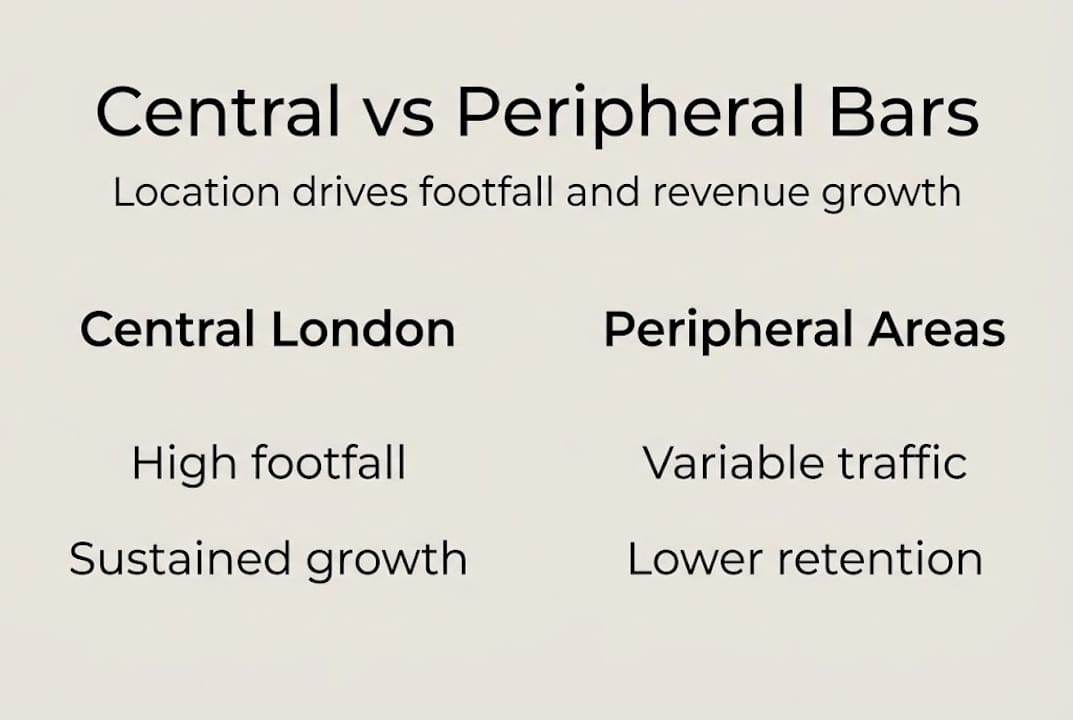
Here is a snapshot of what separates high-performing central venues from those on the outskirts:
| Factor | Central London venues | Peripheral venues |
|---|---|---|
| Annual footfall | Very high, sustained | Variable, often seasonal |
| Transport access | Excellent, multi-modal | Limited, often single route |
| Spend per head | Higher, later in evening | Lower, earlier departures |
| Venue growth trend | Positive (up 2.7%) | Contracting (down 7.0%) |
| Corporate event demand | Strong year-round | Inconsistent |
The benefits of bar location extend beyond simple convenience. When guests can arrive easily and feel confident about getting home safely, they stay longer. Longer stays translate directly into higher spend per head, particularly on premium cocktails and late-night rounds.
Key reasons central location drives bar performance:
- Transport links reduce no-shows and last-minute cancellations at events
- Office proximity captures spontaneous after-work trade in addition to planned bookings
- Visible frontage on busy streets builds brand recognition without paid advertising
- Cluster effect means nearby restaurants and venues create a destination, not just a detour
Pro Tip: When assessing a venue for a corporate event, check which Underground lines serve it and whether it is within a ten-minute walk of multiple offices. Accessibility is the single biggest driver of attendance.
Central London performance data confirms what experienced planners already sense: location is not one factor among many. It is the factor that determines whether all the other factors get a chance to shine.
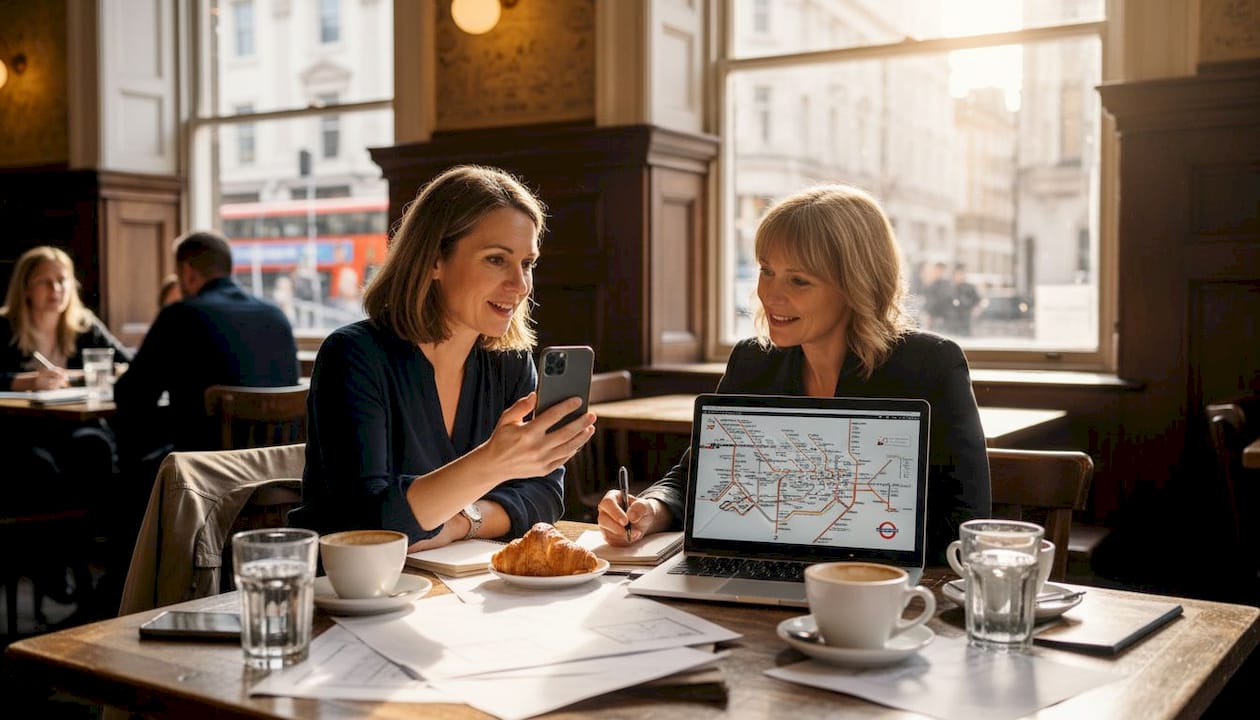
Safety, perception, and late-night sustainability
Economic value is crucial, but sustainability depends on more than revenue. Safety, or more precisely the perception of safety, shapes how long guests stay, how freely they spend, and whether they return.
>Poor perceived safety in non-central areas leads to early departures, which cuts off the higher-margin late-night sales that keep bars profitable. Guests who feel uncertain about their journey home leave before midnight. That means no premium cocktail rounds, no extended private hire fees, and no word-of-mouth from a genuinely memorable evening.
The consequences compound quickly. When one venue closes due to weak footfall, it creates what urban planners call a “dead frontage”: an empty shopfront that signals decline to the surrounding area. Other venues nearby suffer reduced passing trade. The cycle accelerates. This is precisely what has played out in areas like Brixton, where twenty-two venues closed within a concentrated period, each closure making the next one more likely.
“Dead frontages worsen cycles. The effect of a single closure lasts far longer than most operators or planners realise.”
Compare the experience across venue types:
| Metric | Central venue | Peripheral venue |
|---|---|---|
| Perceived safety | High, well-lit, busy streets | Variable, quieter after 10pm |
| Average stay duration | Longer, often past midnight | Shorter, guests leave earlier |
| Revenue from late sales | Significant | Reduced |
| Closure risk | Lower | Higher |
| Reputational recovery | Faster, due to cluster support | Slower, isolated impact |
What makes a bar vibrant is not just the playlist or the cocktail menu. It is the surrounding environment that tells guests they are in the right place at the right time. Busy streets, visible transport options, and neighbouring venues all contribute to a sense of safety that central locations provide almost automatically.
For event planners specifically, this matters enormously. Networking in cocktail bars works best when attendees feel relaxed and unhurried. That ease comes partly from knowing the journey home is simple and safe. A peripheral venue might offer a lower hire fee, but if guests leave early, the return on investment for your event drops sharply.
Footfall conversion: Tourism, local habits, and transience
Safety is only half the story. The next question is whether the people walking past your chosen venue will actually come in and spend money. High footfall is not the same as high-value footfall.
Footfall conversion is where many venue selections go wrong. Transient areas, think major railway termini or tourist corridors, may see enormous crowds but produce few regulars. People passing through are not the same as people looking for a bar to settle into for the evening. Without a base of returning customers, venues become vulnerable to any shift in local habits or transport patterns.
Tourist-heavy locations offer a partial buffer. Visitors from outside London tend to spend freely and are less sensitive to price. However, they also follow seasonal patterns, meaning a venue that thrives in summer may struggle in January. The most resilient bars combine tourist appeal with a strong local professional base, something central financial districts deliver naturally.
How to assess true footfall quality before committing to a venue:
- Visit on a Tuesday evening, not a Friday. Tuesday footfall reflects the working week baseline, not the weekend peak.
- Count how many people enter nearby bars during a thirty-minute window. Conversion rate matters more than street traffic.
- Check the demographic mix. A blend of office workers, residents, and visitors signals a healthy, diverse customer base.
- Research transport patterns. Are people arriving or departing? Arrival-heavy zones convert better.
- Look at the surrounding businesses. Restaurants, coffee shops, and retail open late signal an area that supports evening spending.
Pro Tip: Look beyond traffic volume. Ask whether the crowds you see are actually stopping, sitting down, and ordering. A quiet street near a cluster of offices often outperforms a busy tourist corridor in real spend per head.
The London nightlife guide for 2026 shows that the most successful venues are those that sit within ecosystems of spending, not just streams of passing traffic. Bar promotions work far better when the surrounding area already draws the right audience.
Evolution of London nightlife: Multi-use venues and central zones
Nuanced understanding of footfall enables smarter venue choices, and the best operators in London are already acting on this. The city’s nightlife is evolving rapidly, shaped by cost pressures, changing work patterns, and shifting social habits.
>Nightlife is evolving towards multi-use spaces that serve multiple purposes across the week. A venue that hosts a product launch on Wednesday, a cocktail evening on Thursday, and a live music night on Friday is simply more viable than one that relies on weekend trade alone. This flexibility is only commercially sustainable in locations with consistent footfall, which points firmly towards Zone 1.
For corporate event planners, Zone 1 has become the default choice for a straightforward reason: it minimises no-shows. When a venue is easy to reach from multiple directions, attendees actually turn up. That reliability is worth more than a discounted hire fee in an inconvenient location.
Essential traits for modern venue selection in London:
- Multi-use capability: Can the space host both standing receptions and seated dinners?
- Central postcode: Zone 1 or close to a Zone 1 transport interchange
- Live entertainment options: Live music venues add energy that no décor budget can replicate
- Flexible licensing: Late licences allow events to run naturally rather than to a rigid curfew
- Strong digital presence: Guests research venues before they arrive; visibility matters
There is a broader debate worth acknowledging. Some analysts argue that >Britain’s nightlife policies have systematically favoured residents over cultural venues, accelerating closures through licensing restrictions. Others see the shift as a natural evolution towards earlier, more diverse experiences. Both views contain truth. What is clear is that the role of live music and adaptable programming is becoming more important, not less, in sustaining a venue’s appeal across a full week.
Pro Tip: Flexible venues in central areas deliver reliability for both corporate and social gatherings. If a venue cannot show you how it adapts its space across different event types, that is a warning sign worth heeding.
For those weighing after-work bar vibes against formal event spaces, the answer increasingly is: you do not have to choose. The best central venues offer both.
What most event planners miss about bar location in London
Here is the uncomfortable truth that years of watching events succeed and fail has made clear: most professionals treat location as a logistical checkbox rather than a strategic decision. They confirm the postcode, check the nearest tube station, and move on to the menu.
What they miss is that location shapes the experience before a single guest walks through the door. The energy of the surrounding streets, the ease of the journey, the sense that you are somewhere worth being. These things are not created by the venue. They are borrowed from the neighbourhood.
Central venues attract a diverse crowd almost by default. Different industries, different seniorities, different social circles. That mix is what makes bar location benefits so tangible for networking events. Peripheral spots might look attractive on a budget spreadsheet, but they carry hidden costs: lower attendance, earlier departures, weaker word-of-mouth, and a reputational association with an area that may not reflect your brand.
The city’s social and transport landscape is not neutral. It actively rewards venues in the right places and quietly punishes those in the wrong ones.
Unlock vibrant London venues for your next event
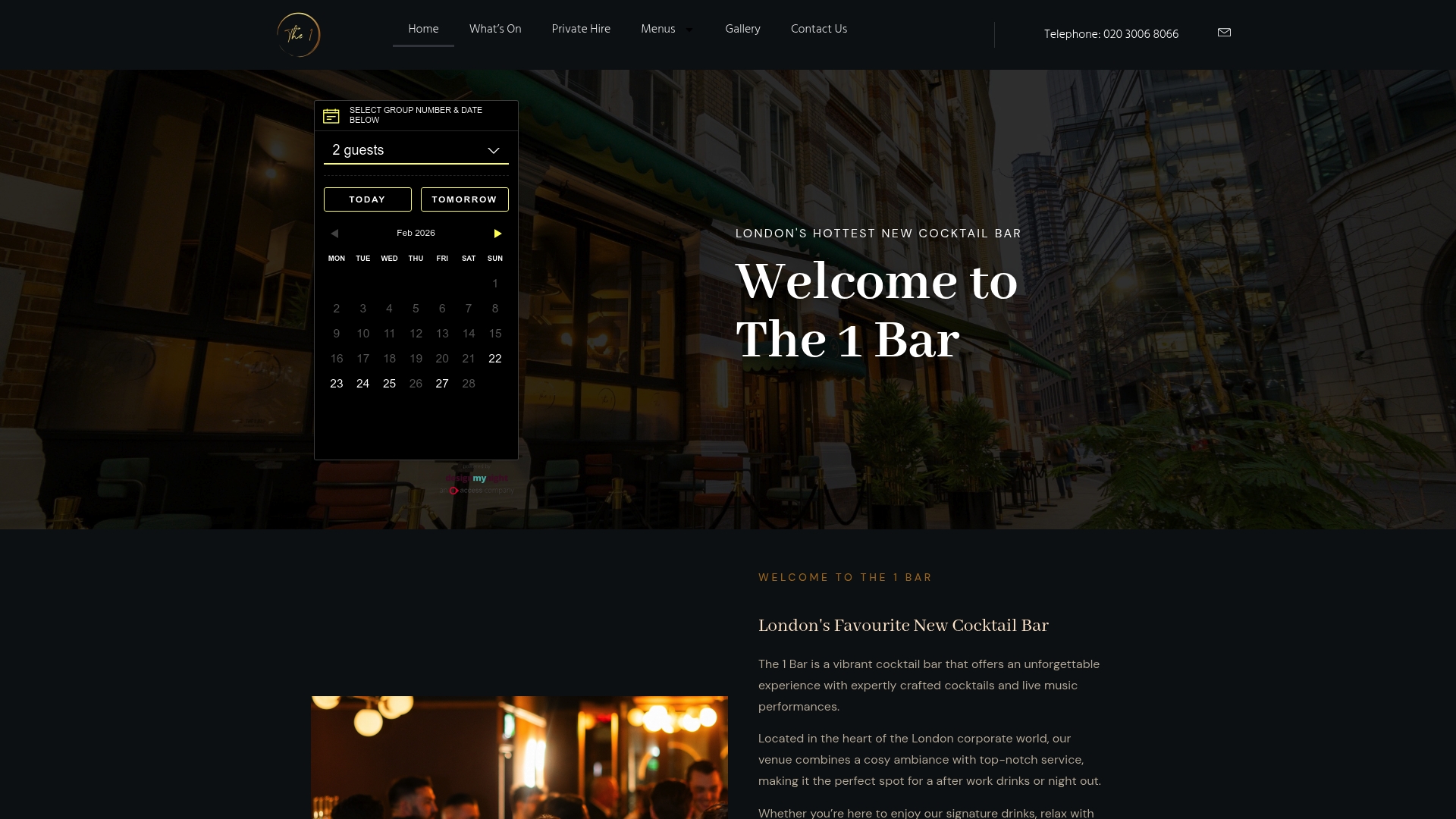
If this article has shifted how you think about venue selection, the next step is straightforward. The 1 Bar sits at 18 Appold Street in London’s financial district, precisely the kind of central, well-connected location this article describes. It is built for professionals who want more than a room: live music, expertly crafted cocktails, and a space that adapts to both corporate hire and social evenings.
Explore how bars shape London nightlife and why central venues consistently outperform. When you are ready to plan, the private hire guide for the financial district covers everything from capacity to catering. For a step-by-step approach, booking vibrant bar hires walks you through the process from first enquiry to event night.
Frequently asked questions
How does location affect bar attendance?
Bar attendance is consistently higher in central London areas because transport access and sustained footfall make it easier for guests to arrive and stay longer. Central Activities Zone venues grew by 2.7% while areas outside central London contracted by 7.0%.
Why do bars in peripheral areas struggle?
Peripheral bars face lower perceived safety after dark and rely on transient customer bases who spend less and leave earlier. Early departures cut off the high-margin late-night sales that keep venues financially viable.
What makes a bar venue vibrant for corporate events?
Central, well-connected locations with adaptable spaces and lively atmospheres are the strongest choice for corporate gatherings. Multi-use spaces in prime locations are now the industry standard for year-round viability.
Is high footfall always good for bars?
Not at all. Transient areas attract large crowds but often fail to convert them into spending customers. High footfall without spend in areas lacking a regular local base is one of the most common reasons venue selections go wrong.
How can event planners ensure venue success?
Prioritise Zone 1 locations with strong transport links, positive safety perceptions, and flexible event spaces. Zone 1 venues consistently deliver lower no-show rates and stronger overall attendance for corporate events.


