
You’ve just arrived at a sleek London bar after a long week, the bartender slides across a beautifully bound menu, and suddenly you’re staring at twelve pages of unfamiliar names, cryptic descriptors, and ingredients you can’t pronounce. Sound familiar? For professionals organising after-work gatherings or celebrations in London, a complex drinks menu can feel less like an invitation and more like a puzzle. This guide breaks down how drinks menus are structured, how to read them with confidence, and how to use that knowledge to make every group event smoother, more inclusive, and genuinely enjoyable for everyone at the table.
Table of Contents
- How drinks menus are structured: what to expect in London venues
- Decoding the drinks: reading between the lines on the menu
- Balancing accessibility and adventure: finding your drink
- Real-life menu experiences: comparing venues and avoiding pitfalls
- Why thoughtful menu explanation matters more than ever
- Plan your next unforgettable event with the perfect drinks menu
- Frequently asked questions
Key Takeaways
| Point | Details |
|---|---|
| Menu clarity is crucial | Easy-to-read sections and simple descriptions make choosing drinks stress-free for guests. |
| Balance variety and focus | Menus work best with 10-20 thoughtfully selected drinks, avoiding overwhelming guests with too many options. |
| Inclusivity drives satisfaction | Non-alcoholic and allergy-friendly choices are essential for modern, welcoming events. |
| Expert guidance enhances experience | Staff who explain or recommend drinks add value and foster confident choices during gatherings. |
How drinks menus are structured: what to expect in London venues
To start, let’s clarify what you might find when you first open a drinks menu at a popular London venue. Not all menus are built the same way, and understanding the logic behind the layout saves you time and awkwardness when ordering for a group.
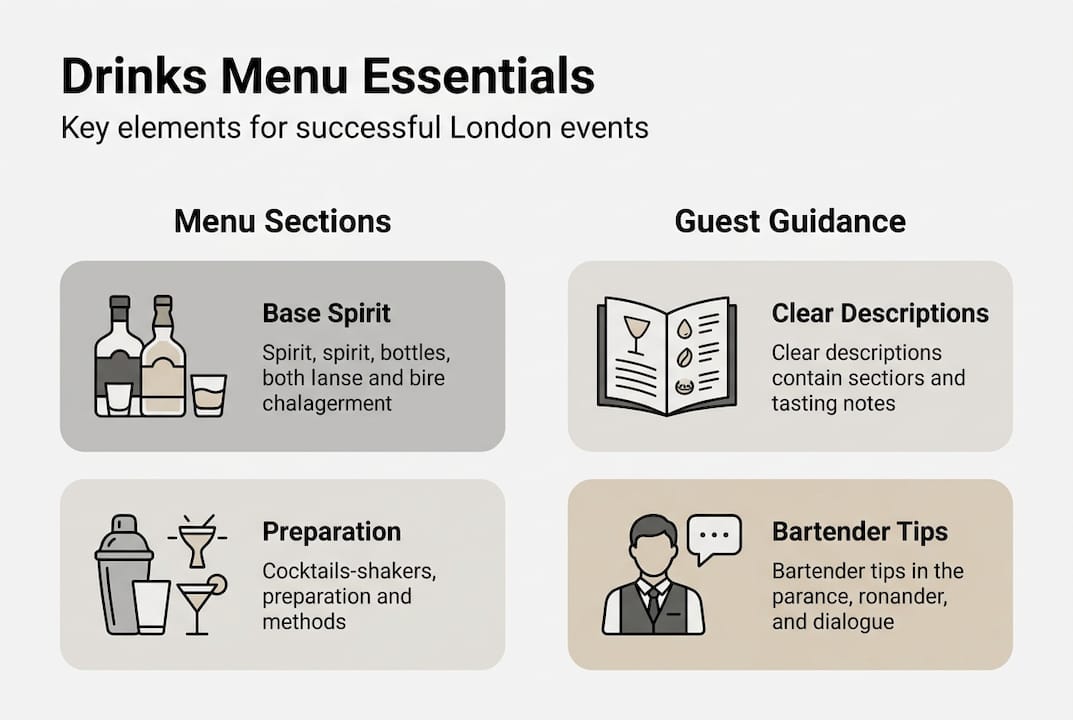
As a starting point, drinks menu structures in London bars are typically organised by base spirit, preparation method, flavour profiles, or creative themes like historical eras or spice journeys to guide customer choice. This means you might open a menu and find a section labelled “Rum” followed by one called “Stirred Classics,” and then a themed chapter inspired by 1920s Prohibition. Each approach tells you something different about the bar’s identity and its priorities.
Here are the most common sections you’ll encounter and what they signal:
- Base spirit sections (Gin, Vodka, Rum, Whisky): Straightforward navigation for guests who know what they like
- Preparation method sections (Shaken, Stirred, Highballs): Signals the bar’s technical focus and drink texture
- Flavour profile sections (Citrus, Floral, Smoky, Spiced): Ideal for guests who think in taste rather than spirit type
- Themed or story-driven sections (Era-based, Ingredient journeys): Adds narrative and memorability to the experience
- Non-alcoholic sections: Increasingly standard and essential for inclusive group events
The format also varies significantly depending on the venue type. Here’s a quick comparison:
| Venue type | Menu structure | Typical length | Key feature |
|---|---|---|---|
| Traditional pub | Beer/wine/spirits list | Short, 1-2 pages | Simplicity and familiarity |
| Cocktail bar | By spirit or preparation | Medium, 4-8 pages | Craft and creativity |
| Themed/upscale bar | Story or era-driven | Longer, 8-15 pages | Narrative and theatre |
“A well-structured menu isn’t just a list of drinks, it’s a communication tool that shapes the entire guest experience from the moment they sit down.”
For event organisers, knowing this structure in advance is powerful. Exploring London drinks menu essentials before you book a venue helps you match the menu style to your group’s preferences. A team of mixed drinkers will fare better with a clear, flavour-led layout than a dense spirit-by-spirit catalogue. The bar drinks selection in London you choose sets the tone for the entire evening.
Decoding the drinks: reading between the lines on the menu
Once you’ve grasped the structure, mastering the language of the menu gives you even more control over your evening. Cocktail menus use a specific vocabulary, and knowing how to decode it means you’ll order with confidence rather than pointing nervously at something that sounds vaguely familiar.
Here’s a step-by-step approach to reading any cocktail menu:
- Scan for base spirits first. Identify what’s driving each drink before reading the full description.
- Look at the preparation method. Spirit plus bitters usually means a stirred drink. Citrus juice almost always means shaken.
- Read the garnish. A lemon peel suggests brightness and citrus-forward flavour. A cherry signals sweetness. Herbs point to freshness or earthiness.
- Check the section heading. “Highballs” means long, refreshing drinks with a mixer. “Sours” means tart and balanced.
- Decode the descriptors. Words like “aromatic” suggest complexity, “botanical” points to herbal or floral notes, and “smoky” is self-explanatory.
As menu reading mechanics confirm, scanning for base spirits first, then decoding structures and reading garnishes for flavour hints, gives guests the clearest path through any menu. Here’s a quick reference table for preparation methods:
| Method | What it means | Typical result |
|---|---|---|
| Shaken | Mixed with ice vigorously | Chilled, slightly diluted, often frothy |
| Stirred | Gently combined with ice | Smooth, spirit-forward, clear |
| Highball | Spirit topped with a mixer | Long, refreshing, lower ABV |
| Built | Assembled directly in the glass | Layered, minimal dilution |
Some descriptors trip people up unnecessarily. “Fat washing” sounds alarming but simply means infusing a spirit with a fat (like butter or bacon) to add richness, then removing the fat. “Botanical” just means plant-derived flavours. Don’t let the language intimidate you.
For those with a preference for gin, gin menu tips offer specific guidance on navigating gin-heavy sections with ease.
Pro Tip: Ask your bartender what the most popular drink in each section is. This gives you a reliable anchor point and often leads to a genuinely personalised recommendation based on your taste.
Avoiding common menu design mistakes is equally useful knowledge. If a menu feels confusing, it may be a design problem, not yours.
Balancing accessibility and adventure: finding your drink
With these menu-reading skills, you can help everyone find something they’ll genuinely enjoy, whether classic or cutting-edge. The real challenge for event organisers is catering to a group with wildly different tastes and comfort levels.
Here’s a useful comparison when thinking about your group:
- Classic, accessible drinks (Negroni, Mojito, Aperol Spritz): Familiar names, predictable flavours, low-risk choices for hesitant guests
- Innovative, adventurous drinks (Clarified milk punch, Umami Martini, Smoked Old Fashioned): Exciting for curious drinkers, but need clear descriptions to avoid confusion
- Non-alcoholic options (Shrubs, botanical sodas, mocktail versions): Essential for inclusive groups, often underrated in quality
Clarity in descriptions directly affects how much guests spend and how satisfied they feel. Well-designed menus boost profits by 10 to 15 per cent, and research shows that bracketing pricing and strategic layout increase average spend per head. For guests, clear tasting notes mean fewer second-guesses and more enjoyment.
The curated drinks menu advice available for London venues shows how thoughtful curation supports both guest satisfaction and event flow. When everyone can find something they want quickly, the evening starts on the right foot.
For celebrations specifically, the cocktail celebrations guide highlights how signature serves and themed rounds can turn a standard drinks order into a memorable shared moment.
Pro Tip: Ask the bar team about the “bartender’s choice” option or today’s signature creation. This is often the drink the team is most proud of, and it gives adventurous guests a trusted starting point without the pressure of choosing blind.
The profitable menu strategies used by top venues also remind us that accessibility and excitement aren’t opposites. The best menus deliver both.
Real-life menu experiences: comparing venues and avoiding pitfalls
Let’s see how this knowledge plays out with real venues across London and how avoiding common menu mistakes can elevate your next gathering.
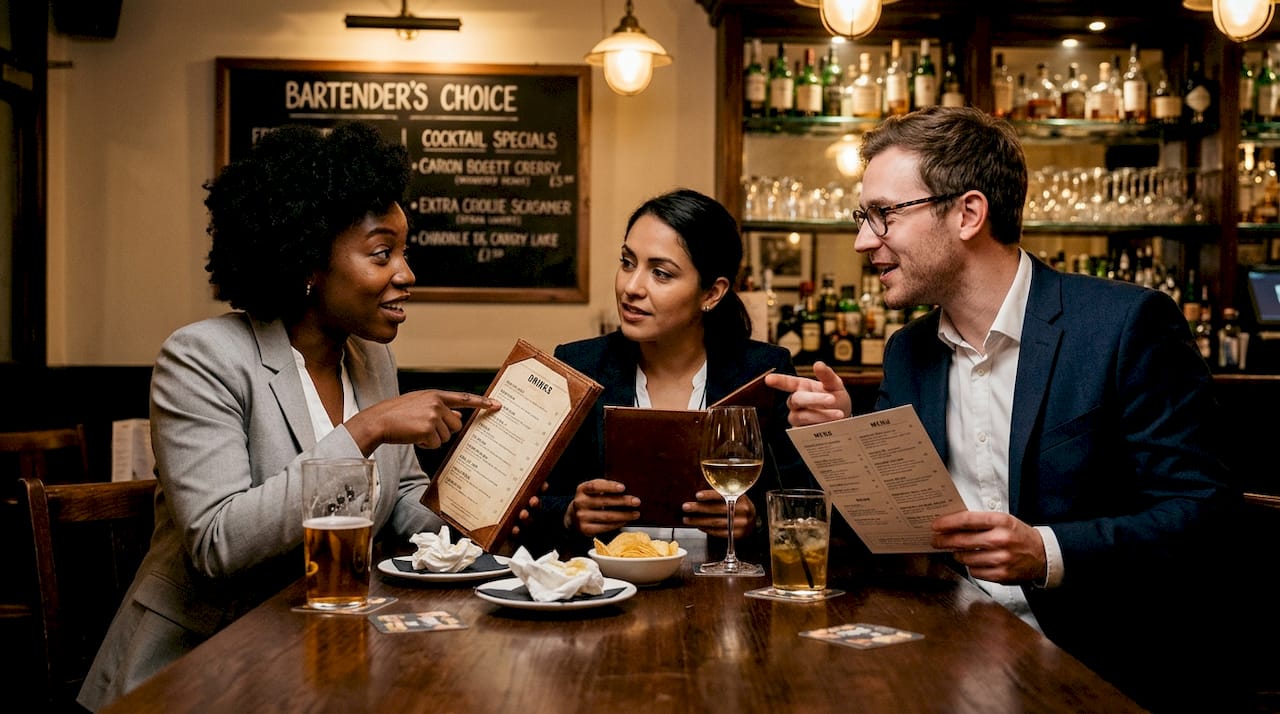
London’s bar scene is genuinely diverse in its approach. Anise in the City balances story-driven sections with strong non-alcoholic options. The Luggage Room at The Beaumont groups its menu by era, taking guests through drinks from the 1700s to the 1980s in a way that sparks conversation. Tayēr + Elementary takes an ingredient-led approach, naming drinks after their core component rather than a cocktail category, which rewards curious guests and rewards repeat visits.
Here’s how different venue types compare in practice:
| Venue type | Menu approach | Best for | Watch out for |
|---|---|---|---|
| Casual dive bar | Short, no-frills list | Quick rounds, budget-friendly | Limited options for non-drinkers |
| Classic pub | Beers, wines, basic spirits | Mixed groups, familiar choices | Rarely any cocktail depth |
| Themed cocktail bar | Story or era-driven sections | Celebrations, curious groups | Can feel overwhelming without staff guidance |
Common red flags in menu design that signal a poor guest experience:
- Menus with more than 35 options: Overly long menus overwhelm guests and slow down ordering for groups
- QR-only menus: Reduce the tactile, social quality of browsing together
- Poor lighting with small fonts: Makes reading genuinely difficult, especially in dim bar settings
- No non-alcoholic section: Immediately excludes a portion of your group
- No tasting notes or descriptors: Leaves guests guessing and bartenders fielding endless questions
Pro Tip: When scouting a venue for a group event, ask to see the menu in advance. A venue that shares its menu readily and explains its structure is one that takes guest experience seriously.
For a broader view of how drinks at London events shape the overall experience, or to brush up on London bar etiquette before your next outing, these resources are worth reviewing. The London nightlife guide also offers a useful overview of venues worth considering for your next event.
Why thoughtful menu explanation matters more than ever
Stepping back, what truly distinguishes a great after-work gathering or celebration isn’t just the drinks, but how well everyone is guided through their choices. There’s a tendency to assume that a longer, more innovative menu automatically signals a better bar. That’s not always true.
Traditional pubs focus on basics such as pints and simple spirits, with no expectation of lengthy menus. That simplicity is part of their appeal. But as cocktail culture has grown, menus have become more complex, and the gap between what a bar offers and what a guest actually understands has widened considerably.
The real differentiator now is staff skill in menu explanation. A bartender who can read a table, spot the hesitant guest, and offer a clear, friendly steer is worth more than a menu with fifty options. Inclusion, clarity, and approachability matter far more than sheer drink innovation.
For event organisers, this means briefing your group before you arrive. Share the menu link, flag a few options across different styles, and let people arrive with some idea of what they fancy. It removes the ordering bottleneck and makes the whole experience feel more relaxed. The role of London bars in shaping social experiences is significant, and venues that invest in staff training and clear menu communication consistently deliver better group nights.
Pro Tip: Before a group event, send the menu to your guests with two or three highlighted picks across different styles. It sparks conversation before the evening even begins.
Plan your next unforgettable event with the perfect drinks menu
To ensure an outstanding experience for your next gathering, consider a venue that takes drinks menu explanation and guest support seriously. The 1 Bar London in the heart of the financial district at 18 Appold Street is built precisely for after-work gatherings and celebrations that demand both quality and clarity.
As a modern cocktail bar with an extensive, well-curated drinks menu and a team trained to guide guests through every option, The 1 Bar removes the guesswork entirely. Whether you’re planning an intimate team celebration or a larger corporate gathering, private bar hire options allow you to tailor the menu and experience to your group’s specific tastes. Reach out to the team to start planning an evening where everyone leaves with a drink they loved.
Frequently asked questions
What makes a drinks menu easy to understand?
Menus with clear sections, simple descriptors and tasting notes, and proactive staff guidance help guests make confident choices without confusion or delay.
How do bars in London group their drinks menus?
Many London bars structure menus by base spirit, preparation method, flavour profile, or themed stories such as historical eras, making it easier for guests to navigate based on personal preference.
Why are non-alcoholic options important on drinks menus?
Non-alcoholic options are essential for inclusivity, ensuring every guest at a group event has enjoyable, considered choices rather than being limited to water or soft drinks.
What is the optimum number of cocktails on a menu to avoid overwhelming guests?
Menus with 10 to 20 cocktails strike the best balance between variety and clarity, keeping choices manageable without sacrificing creativity or range.
Do readable fonts and tactile menus really make a difference?
Absolutely. Readable fonts and physical menus help guests navigate choices comfortably, particularly in the dim lighting that many London cocktail bars favour for atmosphere.