
Few people realise that the cocktail party was not born in New York or Paris but right here in London. In 1924, novelist Alec Waugh invented the cocktail party as a way to give professionals a convivial window between the end of the working day and dinner, running from 5:30 to 7pm. That simple idea changed how cities socialise. Today, London’s cocktail culture has grown into something far richer, blending history, creativity, and community into every glass. This article unpacks how cocktails became the backbone of London celebrations, what the data says about spending and preferences, and how you can use these insights to plan your next unforgettable event.
Table of Contents
- The origin and evolution of cocktails in London celebrations
- Why cocktails matter: Social lubrication and accessibility in modern events
- Cocktail consumption trends: London’s spending, preferences and generational shifts
- Cocktails and music: Creating atmosphere and memorable celebrations in London
- Practical guide: Choosing cocktail venues and event formats in London
- Experience London’s premier cocktail celebrations
- Frequently asked questions
Key Takeaways
| Point | Details |
|---|---|
| Cocktail origins | Cocktail parties began in London to help professionals socialise after work and set global trends. |
| Modern mechanics | Cocktails enable accessible, short celebrations enjoyed by both locals and tourists in diverse venues. |
| Spending and trends | Londoners spend nearly £900 annually on drinks, with cocktails rising in popularity especially among young professionals. |
| Venue impact | Combining cocktails and music creates vibrant, memorable celebrations at venues throughout central London. |
The origin and evolution of cocktails in London celebrations
The cocktail party was never meant to be a grand affair. It was designed to be short, accessible, and sociable. When Alec Waugh hosted the first cocktail party in London in 1924, the goal was simple: give busy professionals a reason to gather without the formality or length of a dinner party. That format proved remarkably durable.
London’s position as a global financial and cultural hub meant this trend spread quickly. The city’s bars and clubs adopted the cocktail as a centrepiece of early evening socialising, and that tradition has never really stopped. What began as a polite gathering over gin fizzes has evolved into a sophisticated culture of craft spirits, seasonal menus, and theatrical presentation.
Today’s modern cocktail bars carry that original spirit forward while pushing boundaries with ingredients, technique, and atmosphere. The core purpose remains unchanged: bring people together, lower the barriers to conversation, and make the transition from work to leisure feel effortless.
Here is what that evolution looks like in practice:
- 1920s: Short, informal gatherings centred on gin and vermouth-based drinks
- 1960s to 1980s: Cocktails became associated with glamour and status
- 1990s to 2000s: Craft bartending emerged, elevating technique and ingredients
- 2010s to present: Experiential cocktail culture, low-ABV options, and themed venues dominate
“The cocktail party was invented to give people more time for genuine social interaction, not less. It was about quality of connection, not quantity of drink.”
That philosophy still resonates in London’s financial district, where after-work gatherings are a weekly ritual for thousands of professionals.
Why cocktails matter: Social lubrication and accessibility in modern events
Cocktails work at celebrations because they lower the social temperature quickly. A well-made drink gives people something to hold, something to talk about, and a shared experience to build on. That is not accidental. The accessible, short gathering format that Waugh pioneered maps perfectly onto the modern professional’s schedule.
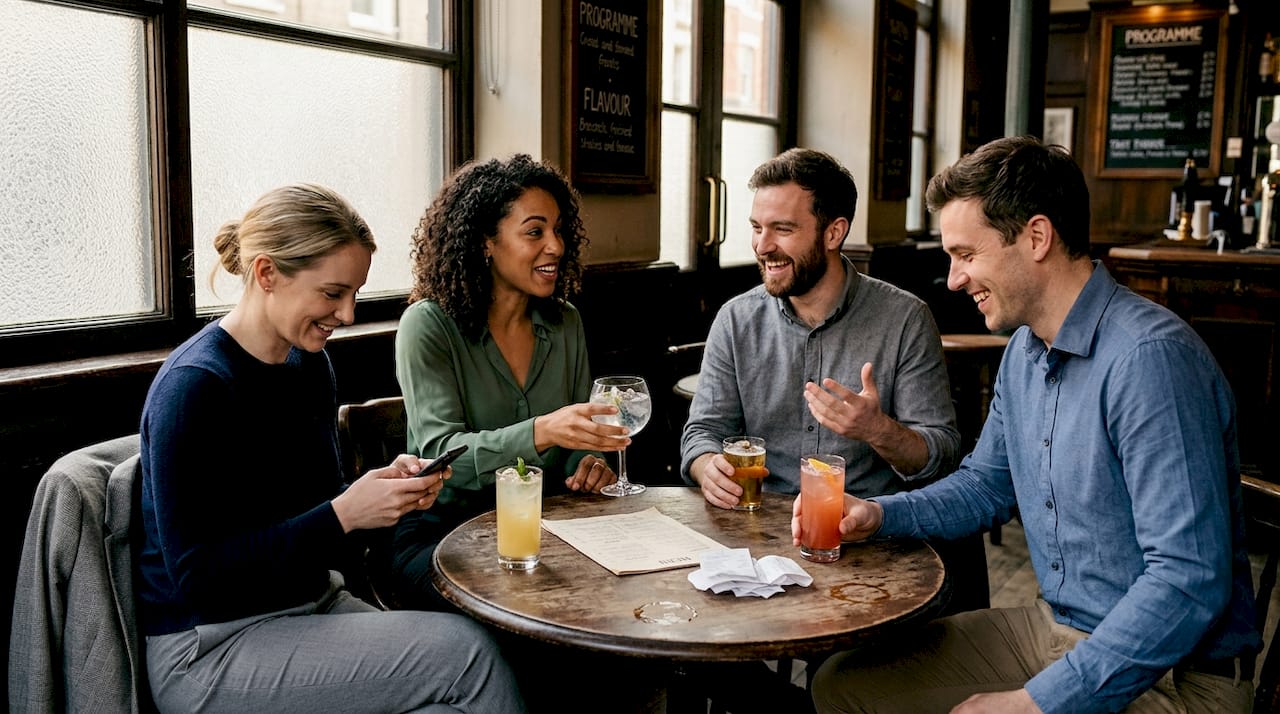
One of the most significant shifts in recent years is the rise of low and no-alcohol cocktails. UK alcohol insights show that younger professionals and Gen Z drinkers are actively seeking options that allow them to participate socially without the effects of high-ABV drinks. This has pushed bars to invest seriously in their non-alcoholic menus, and the results are genuinely impressive.
Here is a practical framework for planning a cocktail-centred celebration:
- Choose a format that fits your crowd. A 90-minute after-work session suits most professionals. Weekend events can run longer with a more relaxed pace.
- Balance the drinks menu. Offer at least two low or no-ABV options alongside your signature cocktails. This keeps everyone included.
- Time it right. Thursday evenings consistently draw the best attendance for after-work events, particularly in London’s financial district where hybrid working patterns mean Thursdays are peak office days.
- Pick a venue with personality. The atmosphere of the space shapes the mood of the event more than almost any other factor.
For inspiration on formats and ideas, the after-work drinks ideas guide covers practical options tailored to London’s financial district. Understanding the role of bars in London’s nightlife also helps you match the right venue to the right occasion.
Pro Tip: If you are organising a team celebration or client event, opt for a curated low-ABV cocktail menu. It keeps the conversation flowing, ensures nobody feels excluded, and avoids the energy dip that can follow heavier drinking.
Cocktail consumption trends: London’s spending, preferences and generational shifts
The numbers behind London’s cocktail culture are striking. After-work social occasions generated £19.7 billion in spending in 2025, with the average participant spending £897 annually across 13 events. That works out to roughly £69 per event, with a meaningful portion going directly on drinks.
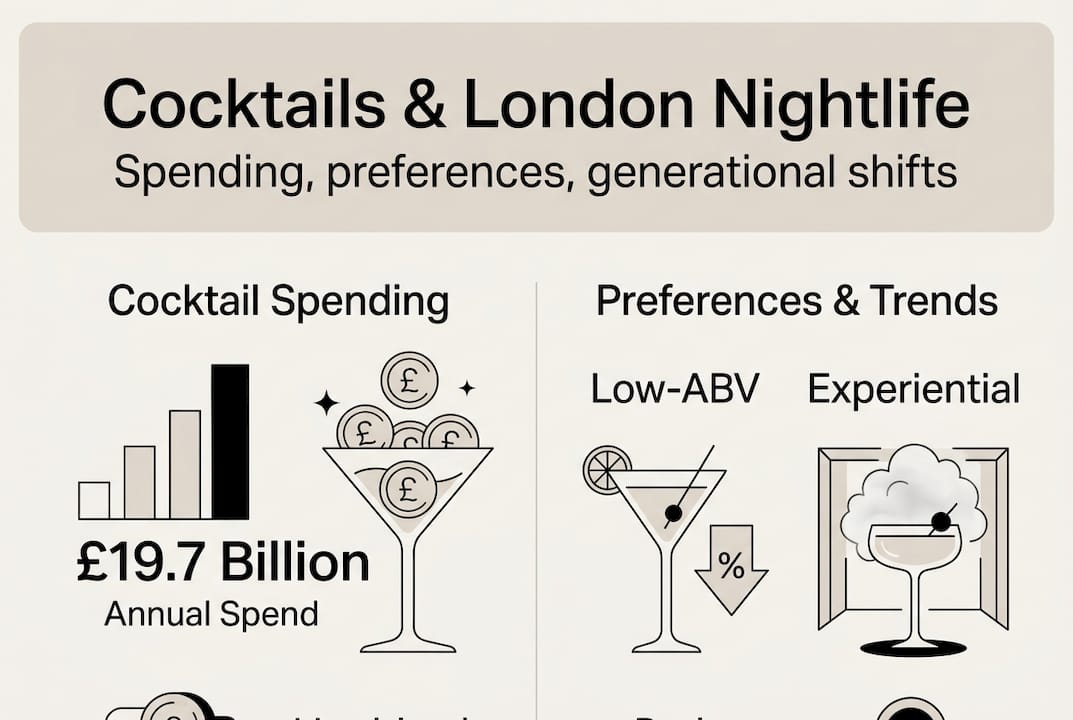
| Metric | Figure |
|---|---|
| Total UK after-work social spend (2025) | £19.7 billion |
| Average annual spend per participant | £897 |
| Average number of events per year | 13 |
| UK adults who drink alcohol | 82% |
| Adults preferring spirits | 20% |
Cocktails are not just holding their own in this market. They are growing. Cocktail occasions grew by 0.6 percentage points in pub and bar settings, driven primarily by young adults. That growth is happening even as overall alcohol consumption trends slightly downward, which tells you something important: people are drinking less but choosing better.
Generational preferences are reshaping menus across London:
- Millennials favour classic cocktails with premium spirits, particularly gin and whisky
- Gen Z gravitates toward low and no-ABV options, visually striking presentations, and sustainable sourcing
- Professionals over 35 tend to prioritise quality and service over novelty
For those who love gin specifically, the gin preference and style tips guide offers a detailed breakdown of how to navigate London’s gin-forward cocktail menus. Meanwhile, London after-work drinking trends show that the return-to-office movement has directly boosted Thursday and Friday evening trade across the City.
Cocktails and music: Creating atmosphere and memorable celebrations in London
A great cocktail in a silent room is pleasant. The same cocktail with the right music playing is memorable. The combination of expertly crafted drinks and live performance transforms a gathering into an experience people talk about for weeks.
Top London venues for cocktails and live music include Gambit Bar, Nightjar, Scarfes Bar, and Tayēr + Elementary. Each takes a different approach, but all share a commitment to pairing the quality of the drink with the quality of the atmosphere.
| Venue | Music style | Cocktail focus | Best for |
|---|---|---|---|
| Nightjar | Live jazz and swing | Classic and prohibition-era | Special occasions |
| Scarfes Bar | Acoustic and piano | Seasonal and botanical | Intimate gatherings |
| Gambit Bar | DJ sets | Contemporary and creative | After-work groups |
| Tayēr + Elementary | Ambient and curated | Experimental and technical | Cocktail enthusiasts |
Innovative bars succeed by treating hospitality, music, and cocktails as a single unified experience rather than separate elements. Younger crowds in particular respond to venues where every detail feels considered.
Understanding the role of music in shaping bar atmosphere helps you choose the right venue for your event’s tone. For a broader overview, the cocktail bars and live music guide covers London’s best options in 2026. If you want to match a venue to a specific vibe, the music genre guide for after-work events is a practical starting point.
Practical guide: Choosing cocktail venues and event formats in London
Knowing what makes a great cocktail venue is one thing. Translating that into a well-organised event is another. The 90-minute cocktail party format remains one of the most effective structures for professional and tourist celebrations alike. It is long enough to relax and connect, short enough to leave people wanting more.
Here is a step-by-step approach to planning your event:
- Define your purpose. Is this a team celebration, a client event, a birthday, or a casual after-work social? The purpose shapes every other decision.
- Set your headcount and budget early. London venues fill up quickly, especially on Thursdays. Knowing your numbers helps you secure the right space.
- Prioritise the drinks menu. A venue with a thoughtful, varied cocktail menu signals quality across the board. Look for seasonal ingredients and low-ABV options.
- Consider the journey. Venues near transport links matter more than you might think, especially for after-work events when people are coming straight from the office.
- Ask about private hire. Many London bars offer dedicated spaces for groups, which gives you control over music, lighting, and service without the cost of a full venue hire.
For deeper guidance on event planning, the successful London events guide covers how drinks choices shape the overall experience. If you are planning something more formal, the cocktail mixing workflow article explains how professional bartenders approach upscale events.
Pro Tip: Book your venue for a Thursday evening if attendance is a priority. Hybrid working patterns mean Thursday is now the most popular office day across London’s financial district, which translates directly into higher turnout for after-work events.
Experience London’s premier cocktail celebrations
London’s cocktail culture is not just something to read about. It is something to experience. The 1 Bar, located at 18 Appold Street in the heart of the financial district, brings together expertly crafted cocktails, live music, and a vibrant atmosphere designed specifically for professionals and visitors who want more than just a drink.
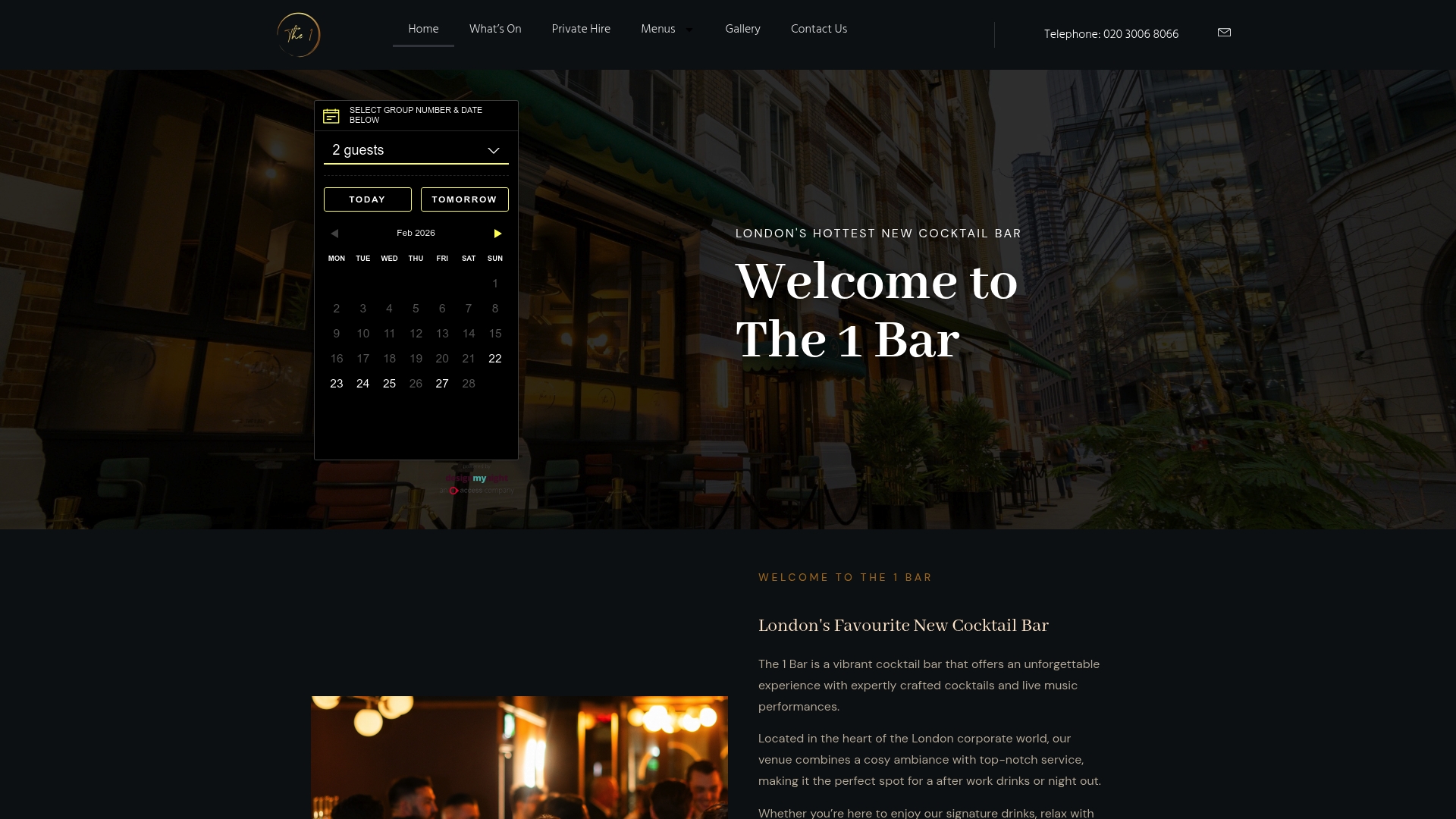
Whether you are planning a casual after-work social or a fully organised private celebration, The 1 Bar offers the setting, the service, and the drinks menu to make it memorable. Explore what a cocktail bar can offer beyond the standard pub experience, or take a look at the private hire options available for groups and corporate events. If you are ready to start planning, the guide to booking private hire walks you through everything you need to know to secure the perfect space for your next London event.
Frequently asked questions
Why are cocktails central to after-work events in London?
Cocktails enable short, accessible gatherings that bridge the gap between the working day and the evening, making them a natural fit for professionals who want to socialise without committing to a long night out.
Which London venues offer cocktails with live music?
Gambit Bar, Nightjar, Scarfes Bar, and Tayēr + Elementary are among London’s top venues for combining cocktails with live jazz, acoustic sets, or DJ performances.
What are the latest cocktail trends among young professionals?
Young professionals and Gen Z increasingly favour low and no-ABV cocktails alongside premium, experiential options, particularly at venues that treat the overall atmosphere as part of the offering.
How much do Londoners typically spend on drinks at celebrations?
Londoners spend an average of £897 annually across approximately 13 social events per year, reflecting a strong and consistent appetite for quality social occasions built around drinks.